
Eng
Solar Panels for Home
Clean Energy, Lower Costs, and an Energy-Independent Home
Save up to 90% on electricity costs!
Solar panels for home are one of the most effective and long-term solutions for achieving energy independence. The system allows you to generate clean energy on the roof of your own house and minimize monthly utility bills.
Why should you install solar panels for your home?
- Significant Savings — A correctly planned system reduces electricity costs by 60% to 90%.
- Energy Independence — You are less dependent on rising electricity tariffs.
- Long-term Guarantee — The system operates stably for 25-30 years, making it a profitable investment.
- Fast Installation — The installation process is completed in a few days and does not require structural changes to the house.
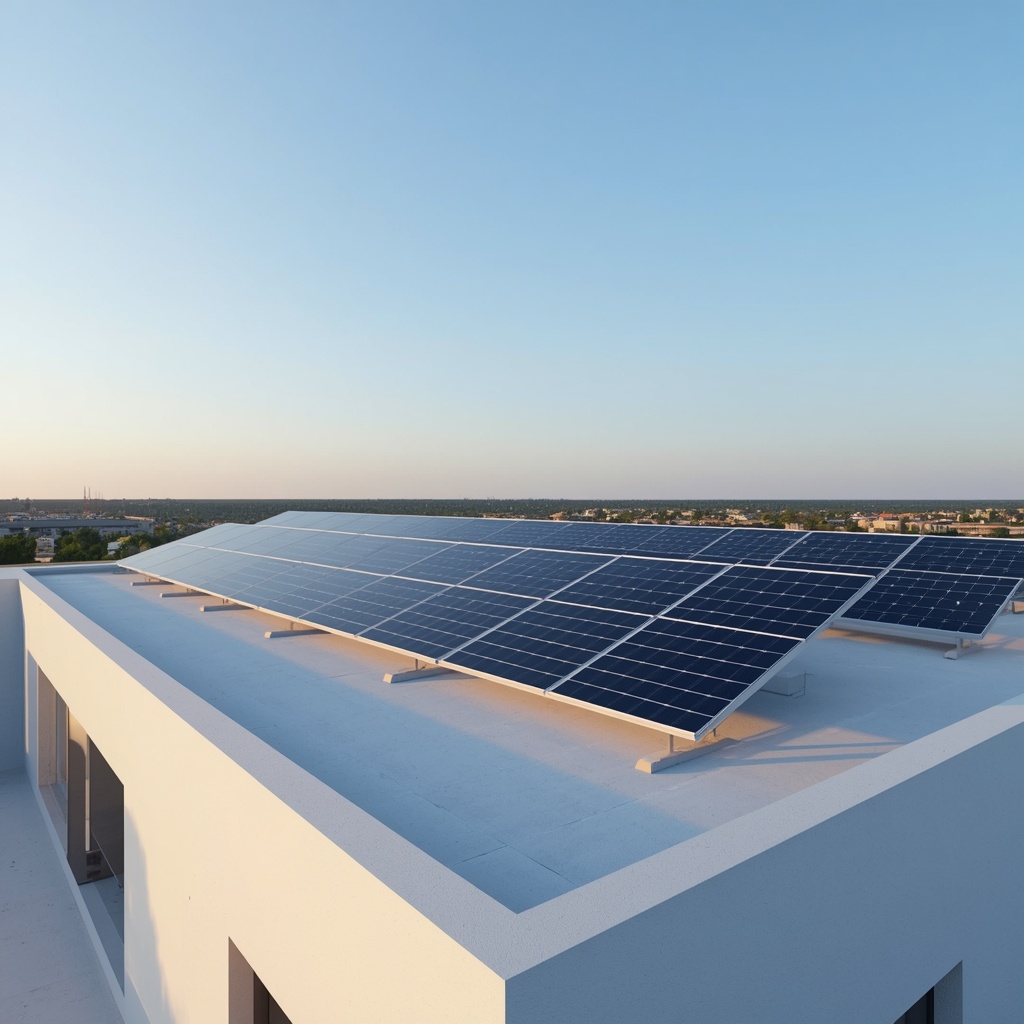
Solar Panel Efficiency and Savings
The amount of electricity generated by a solar energy system depends on several important factors, including the number of panels, system capacity (kW), roof size, and solar exposure.
In Georgia, on average, a 1-kilowatt solar system generates approximately 1,300 – 1,600 kilowatt-hours of electricity per year.
Below are estimated indicators of how much can be saved in an average private house:
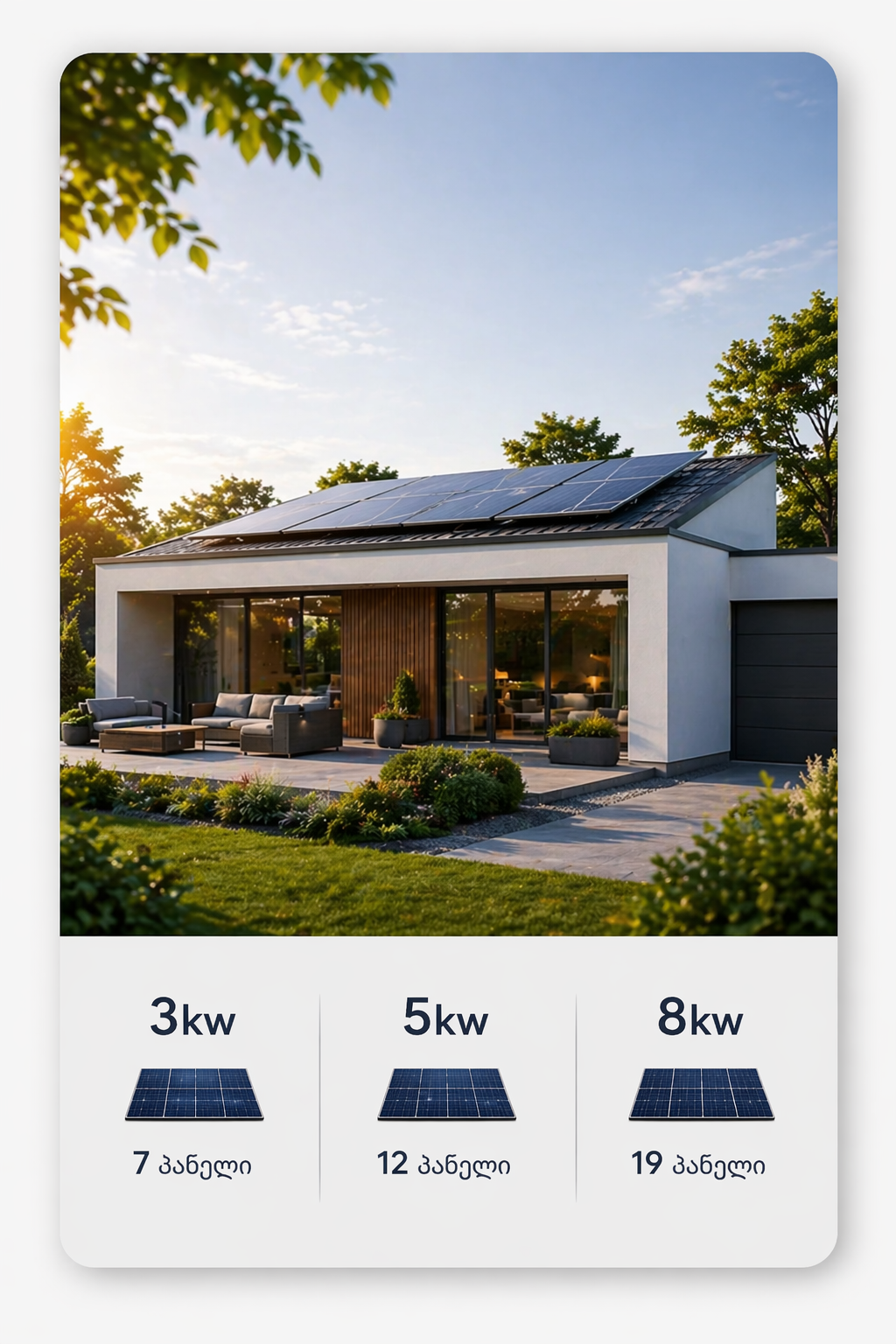
| System Capacity | Number of Panels | Annual Generation | Area of Use |
| 3 kW | 7–9 panels | 4,000–4,500 kWh | Small house |
| 5 kW | 12–14 panels | 6,500–8,000 kWh | Average family |
| 8 kW | 18–22 panels | 10,000–12,000 kWh | Large house |
How do solar panels for home work?
The system works on a simple and effective principle: solar panels absorb daylight and convert it into direct current (DC) electricity, while a special device — an inverter — turns it into the alternating current (AC) needed for household appliances. The process is fully automated and requires no intervention from you.
What economy does the system provide?
Switching to solar energy directly impacts your budget:
- Monthly Savings: If your home spends an average of 400-600 GEL per month on electricity, solar panels for home will reduce this figure by 60-90%.
- Sale of Excess Energy (Net Metering): If you generate more energy than you consume (for example, in summer), the surplus kWh are stored in the unified electricity grid. You can use this “reserve” during winter or nighttime hours.
- Return on Investment: The system pays for itself in an average of 4-6 years, and for the next 20-25 years, you essentially enjoy free electricity.
Start saving today and turn solar energy into a source of financial freedom for your family.

lish version coming soon.